Celebrating

SEPTEMBER 12-13, 2026
Celebrating
Current & Former Military!


Aircraft Lineup
Experience aviation history in motion. Only at the 2026 Show Me State Air Show!
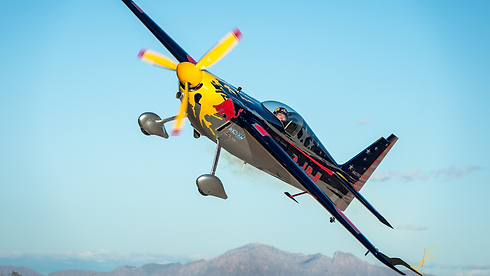
Red Bull's Kirby Chambliss
From Cobra Takeoffs to World Championships
Kirby Chambliss started flying at 13 and never looked back. By 24 he was the youngest commercial pilot at Southwest Airlines, made captain at 28, and along the way built one of the most decorated careers in aerobatics: a 5-time U.S. National Aerobatic Champion and 2-time Red Bull Air Race World Champion.
Watch for his signature cobra takeoff, a heart-stopping maneuver that's become his calling card in air shows around the world.
-
13 medals won in world aerobatic competition
-
Two-time Red Bull Air Race World Champion
-
Signature cobra takeoff is a must-see moment
Sponsored By:


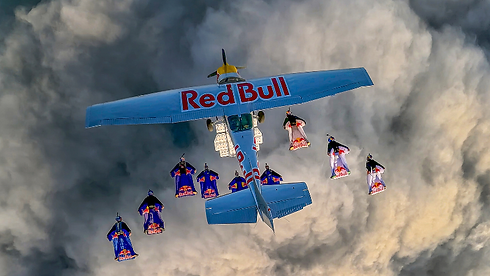
Red Bull Skydive Team
Human Flight, 3,000 Meters Up
Three of the world's most gifted aerial acrobats make up the Red Bull Skydive Team, and they're bringing the third dimension down to earth. Jumping from 3,000 meters, the team executes precision wingsuit formations trailing smoke, turning free fall into a choreographed display of human flight. Every maneuver is backed by rigorous training and meticulous preparation, so the show stays as breathtaking as it is safe.
-
Precision wingsuit formations performed from 3,000 meters
-
Smoke-trailed flight maneuvers visible across the entire show
-
Elite team trained to the highest safety standards in the sport
Sponsored By:

B-2 Spirit
The B-2 Spirit calls Missouri home, and it is flying over the Show Me State Air Show on Saturday, September 12 only. Flown by the 509th Bomb Wing out of Whiteman Air Force Base, it is the only stealth bomber of its kind in the world, and every one of them is based right here in our state. Its flying wing design gives it a shape unlike anything else in the sky and a radar signature small enough to slip past defenses undetected. You will notice the silence before you notice the aircraft.
Saturday September 12 only. Don't miss it!
1947 Ryan Navion (Mike Hartman Airshows)
Post-War Style Meets Aerobatic Skill
Originally designed by North American Aviation, the Navion brought fighter-inspired design to the civilian market after WWII. With sleek lines and rugged construction, it was adopted by both private pilots and the U.S. military. Today, this beautifully restored 1947 Navion stuns crowds with aerobatics performed by Mike Hartman.
Highlights
-
Civilian aircraft inspired by the P‑51 Mustang
-
One of 2,600+ built between 1946–1951
-
Performs thrilling aerobatics at airshows


SBD Dauntless
The Douglas SBD Dauntless was the US Navy's main dive bomber in the early years of World War II. Its finest hour came at the Battle of Midway in June 1942, where Dauntless crews sank four Japanese aircraft carriers in a single day and turned the course of the war in the Pacific. The plane was built tough enough to dive almost straight down at its target, which let its two-man crew drop a 1,000-pound bomb on a moving ship with remarkable accuracy.
Powered by a single radial engine, it could fly about 250 miles per hour and stay in the air for hundreds of miles. Some historians credit the Dauntless with sinking more Japanese ships than any other American aircraft of the war.
Sponsored by:

Huey and Cobra from AAHF
A Tribute to Army Aviation
Presented by the Army Aviation Heritage Foundation (AAHF), these Vietnam-era helicopters are more than machines, they’re living memorials of service and sacrifice. The UH-1 Huey and AH-1 Cobra played a vital role in military operations and are now fully restored to flying condition.
AAHF is a 501(c)(3) nonprofit made up of veterans and dedicated volunteers who preserve Army Aviation history through hands-on education and flight experiences. Their mission: to honor veterans, educate the public, and keep Army Aviation’s proud legacy alive.
-
Experience live flight demonstrations and static displays
-
Meet the “Sky Soldiers” and volunteers who fly and maintain the aircraft
-
Learn through interactive, patriotic presentations at the show
Sponsored By:


Erik Edgren Airshows
One Pilot, A Variety of Acts, Zero Ordinary Moments
Erik Edgren doesn't just fly one routine. He brings a variety of acts to the box. His T-Clips takes the stage for wild comedy antics as "Hobie Washburn," gyroscopic power-on aerobatics, and an industry-first deadstick roll to landing. Whatever the show calls for, Erik's got an act built for it, sometimes more than one in the same day.
-
Comedy act features the world's only inverted comedy pass
-
Deadstick routine includes a first-of-its-kind deadstick roll to landing
Static Display Aircraft
Explore a wide range of historic and modern aircraft on display throughout the event grounds. Get up close, ask questions, and take photos with:

F-16 Fighting Falcon
The F-16 has been the workhorse fighter of the U.S. Air Force for more than four decades, and seeing one parked on the ramp gives you a sense of just how compact it really is.
Built around a single engine and a bubble canopy that gives the pilot a nearly unobstructed 360-degree view, the F-16 was the first production fighter designed with fly-by-wire controls. That system, paired with a reclined seat and a side-mounted control stick, lets pilots pull sustained 9G turns. More than 4,500 have been built, and it remains in service with two dozen air forces around the world.
Step up close and look at the canopy. Pilots call it the Viper, and one look at the airframe tells you why.

SBD Dauntless
The SBD Dauntless changed the course of the Pacific war in about five minutes. On the morning of June 4, 1942, Dauntless crews rolled into their dives over the Japanese fleet at Midway and left four enemy carriers burning. No other American aircraft of the war can claim a single day like it.
What made it work were the perforated split flaps along the trailing edge of each wing. Those holes let the aircraft hold a steady 70-degree dive without buffeting or building up too much speed, giving the crew time to aim. Aircrews nicknamed it Slow But Deadly, and they meant it as a compliment.
Fewer than a handful remain airworthy anywhere in the world. Listen for the low growl of the radial engine and watch the wings as it comes off the show line.
Sponsored by:

Nanching CJ-6
The Nanchang CJ-6 is a Chinese-built primary trainer that traces its roots to the Soviet Yak-18, though the airframe was redesigned enough to stand on its own. It first flew in 1958 and went on to train generations of Chinese military pilots.
Power comes from a nine-cylinder radial engine that makes a distinctive sound you will hear before you see the aircraft. Retractable gear, a tandem cockpit, and honest handling made it a capable trainer, and those same qualities have made it one of the most popular warbirds on the American civilian market today.
Take a look at the wide-set landing gear and low-pressure tires. This aircraft was built to operate from rough grass fields, and it shows.

C-130 Hercules
The C-130 Hercules is one of the most recognizable workhorses in military aviation, and this is a rare chance to see one up close.
Since entering service in the 1950s, the Hercules has handled everything from troop transport and cargo hauling to aerial refueling and firefighting, proving itself as one of the most versatile aircraft ever built. Its four-engine turboprop design and rugged airframe let it operate from short, unpaved runways that would ground most other transports.
Walk the flight line and get a firsthand look at the aircraft that's supported nearly every major U.S. military operation for the past seven decades.

UH-60 Black Hawk
Since its introduction in 1979, the Sikorsky UH‑60 Black Hawk has been the backbone of the U.S. Army’s helicopter fleet. Designed for versatility and durability, this twin-engine utility helicopter can be found in nearly every combat and humanitarian mission, from troop transport and medical evacuation to disaster relief and firefighting.
Built to handle rugged terrain and adverse weather conditions, the Black Hawk can lift over 9,000 pounds and reach speeds exceeding 180 mph. Its armored fuselage and advanced avionics make it one of the most capable helicopters in the world.
To date, more than 4,000 Black Hawks have been produced and used by dozens of countries. Its iconic shape and thumping rotor sound are instantly recognizable. It’s a symbol of strength and support on the battlefield and beyond.

UH-72 Lakota
The UH-72 Lakota is a light utility helicopter based on the Eurocopter EC145, introduced into U.S. military service in 2006. It was designed to perform non-combat roles such as search and rescue (SAR), medical evacuation (MEDEVAC), border patrol, and pilot training.
With twin engines, modern digital cockpit systems, and room for up to nine passengers, the Lakota offers flexibility in both civilian and military operations. It’s used by the U.S. Army National Guard and training schools across the country and is valued for its low maintenance and operating costs.
While not built for combat, the UH‑72 plays a vital role in ensuring mission readiness and public safety. It demonstrates how modern helicopters can be adapted to serve communities in times of need.

T-28
Developed after World War II, the North American T-28 Trojan was originally designed as a military trainer aircraft for both the U.S. Air Force and Navy. Its tricycle landing gear, bubble canopy, and powerful radial engine made it a dramatic upgrade from earlier trainers, helping thousands of pilots transition into jet-age aircraft.
Beyond training, the T-28 saw combat during conflicts in Southeast Asia and Africa, thanks to its ability to carry rockets, machine guns, and bombs. It was used by U.S. allies in counter-insurgency missions and remains a surprisingly versatile platform for its time.
Today, the T-28 is a favorite among warbird collectors and airshow pilots, appreciated for its speed, strength, and historical presence. Whether on the ground or in the air, it commands attention with its loud radial engine and aggressive silhouette.

Missouri State Highway Patrol Helicopter
Eyes in the Sky for Public Safety
This Bell 407 is a high-tech helicopter used by the Missouri State Highway Patrol. Equipped with infrared cameras and street overlay mapping, it helps officers track suspects, locate missing persons, and improve safety during dangerous pursuits.
Highlights
-
FLIR thermal imaging and real-time video overlays
-
Supports law enforcement and search operations
-
Enhances officer safety in high-risk situations

Cessna 182
Skydivers’ Launchpad in the Sky
The Cessna 182 Skylane is a classic four-seat aircraft that’s become a favorite in the skydiving world. Known for its high wing, reliable engine, and stable flight characteristics, it offers an ideal platform for jump operations.
Highlights
-
In production since 1956
-
Popular for private flying and training
-
Modified with wide doors for parachute jumps

Icarus Glider
More information coming soon...
More Aircraft Coming Soon!
We’re still confirming additional civilian and military performers. Check back often as we update the lineup in the weeks leading up to the show.