Celebrating

SEPTEMBER 12-13, 2026
Celebrating
Current & Former Military!


Aircraft Lineup
Experience aviation history in motion. Only at the 2025 Show Me State Air Show!

SB2C Helldiver
The Last of Its Kind in the Sky
Out of 7,140 built, this is the only remaining SB2C Helldiver still flying. Known for its speed and firepower, the Helldiver played a critical role in World War II and was responsible for sinking more enemy ship tonnage than any other U.S. aircraft.
-
First flew in combat in November 1943 during the campaign for Rabaul
-
Operated by both the U.S. Navy and Marine Corps
-
A true rarity and WWII icon in action
Sponsored by: Carl & Terri Haake
Photos courtesy of the West Texas Wing – Commemorative Air Force
4-Ship Stearman Flight Formation Team
Precision Flying, Classic Style
The PT-17 traces its roots to the Stearman Model 70, built as a private venture to meet a 1934 U.S. Army Air Corps request for a new trainer to replace its aging primary trainer fleet. Re-engined with a Wright J-5 Whirlwind, the design was first ordered by the U.S. Navy in 1935 as the NS-1.
Today, the Stearman Flight Formation Team carries on the legacy of this iconic aircraft with elegance that showcase the reliability and timeless beauty of the Model 75 biplane.
-
Iconic WWII-era primary trainer aircraft
-
Known for its graceful handling and striking appearance
-
A crowd favorite for history lovers and flight fans alike
Photos courtesy of the Stearman Flight Formation Team


Bell UH‑1H Iroquois “Huey”
The Helicopter That Defined a Generation
The Bell UH‑1 Iroquois, better known as the “Huey,” is a legendary utility helicopter that became an icon of the Vietnam War.
Developed in the 1950s and adopted by the U.S. Army for medevac and general support, it became the first turbine-powered helicopter in military service. During the Vietnam era, Hueys flew missions ranging from troop transport and supply to medevac and ground attack. With more than 16,000 built, the Huey is one of the most recognized and enduring helicopters in aviation history.
Highlights
-
First U.S. military turbine-powered helicopter
-
Flown in thousands of missions during Vietnam
-
Still serving worldwide today
Bell AH‑1F Cobra
The First True Attack Helicopter
The Bell AH‑1F Cobra is a Vietnam-era attack helicopter that evolved from the Huey platform. Its slim fuselage, tandem cockpit, and powerful armament made it the first helicopter designed purely for combat. First flown in 1967, it served as a fast, maneuverable gunship escort for transport helicopters and troops in the field. Its service extended well beyond Vietnam, remaining in use for decades.
Highlights
-
Tandem-seat, gunship variant of the Huey
-
Equipped with a chin turret and weapons pods
-
Replaced by the AH‑64 Apache in frontline roles


Bell OH‑58A Kiowa
Light Scout with a Long Service Life
The Bell OH‑58A Kiowa is a nimble observation and light utility helicopter based on the civilian JetRanger. It served as the eyes and ears of Army aviation, beginning in the Vietnam War and continuing through multiple modern conflicts. Later variants introduced sensors and weapons for reconnaissance and light attack.
Highlights
-
Introduced in 1969 for Army scouting roles
-
Served through Vietnam, Iraq, and Afghanistan
-
Known for its agility and versatility in the field
Children of Fallen Heroes Parachute Team
The Children of Fallen Heroes Parachute Team (CFH) is a 501(c)(3) nonprofit that honors the children of fallen military personnel and first responders. Founded in 2015 in North Carolina, CFH offers youth a path toward healing through educational programs, outdoor experiences, and team-based skydiving events.
The Parachute Team is recognized for delivering high-impact aerial performances that pay tribute to national heroes and inspire audiences. In 2023, they earned the ICAS Platinum Pinnacle Award, a top honor in the airshow industry.
-
Features national and world champion skydivers and Golden Knights alumni
-
Known for precision formation jumps, high-speed freefalls, and breathtaking entries
-
Performs at major events alongside top-tier teams like the Blue Angels and Red Bull Air Force


RC Jet Demonstrations
Small Plane, Big Thrills
The RC SR-71 Blackbird takes to the skies! This scale model of the legendary spy plane shows off incredible speed, precision, and craftsmanship. A miniature marvel that proves even small planes can deliver big excitement!
Rifle Airshows – RV8 Aircraft
High-Energy Aerobatics with a Personal Touch
Rifle Airshows is flown by Joe “Rifle” Shetterly, a former USAF A‑10 demonstration pilot and airshow veteran known for his precision RV‑8 aerobatics. Growing up building model aircraft, he soloed on his 16th birthday, became an aerobatic competitor by his teens, and later flew hundreds of A‑10 demos, before continuing airshow performances in his RV‑8 since 2011.
-
The RV‑8 is a sleek, homebuilt biplane powered by a 180 HP Lycoming IO‑360, featuring dramatic smoke trails and tight, heart‑pounding maneuvers
-
Renowned for sharp turns, power dives, and dynamic crowd engagement
-
A personal, interactive act that bridges aerobatics with storytelling, perfect for all audiences
🔗 Visit RifleAirshows.com to learn more about Joe and his signature act.


Pitts S2S / B Correll
The airshow aircraft piloted by Brian is a highly modified Pitts S2S, much different than the original aircraft that left the factory in 1979. Brian is a FAA Certified A&P Mechanic and has used those skills to modify and maintain his aircraft. The red and blue Pitts Biplane has been strengthened and modified making it capable of the extreme aerobatic routine that Brian puts his aircraft through. The use of lightweight materials throughout, enlarged control surfaces and increased power all add up to give the aircraft insane performance with nostalgic biplane style.
-
Originally built in 1979 in Afton Wyoming at the Pitts Factory
-
Undergone many modifications to the engine / airframe / propeller / landing gear / instruments
-
Construction materials: steel, titanium, wood, carbon fiber, fiberglass.
-
The covering on the wings and fuselage is a Dacron fabric coated with primer and paint.
-
Fly at speeds over 230 mph and backwards at over 60 mph.
-
During the routine he will experience 8 positive g’s and 5 negative g’s.
1947 Ryan Navion (Mike Hartman Airshows)
Post-War Style Meets Aerobatic Skill
Originally designed by North American Aviation, the Navion brought fighter-inspired design to the civilian market after WWII. With sleek lines and rugged construction, it was adopted by both private pilots and the U.S. military. Today, this beautifully restored 1947 Navion stuns crowds with aerobatics performed by Mike Hartman.
Highlights
-
Civilian aircraft inspired by the P‑51 Mustang
-
One of 2,600+ built between 1946–1951
-
Performs thrilling aerobatics at airshows


Cessna 182 (Parachute Jump Platform)
Skydivers’ Launchpad in the Sky
The Cessna 182 Skylane is a classic four-seat aircraft that’s become a favorite in the skydiving world. Known for its high wing, reliable engine, and stable flight characteristics, it offers an ideal platform for jump operations.
Highlights
-
In production since 1956
-
Popular for private flying and training
-
Modified with wide doors for parachute jumps
UH-1 Huey & AH-1 Cobra
A Tribute to Army Aviation
Presented by the Army Aviation Heritage Foundation (AAHF), these Vietnam-era helicopters are more than machines, they’re living memorials of service and sacrifice. The UH-1 Huey and AH-1 Cobra played a vital role in military operations and are now fully restored to flying condition.
AAHF is a 501(c)(3) nonprofit made up of veterans and dedicated volunteers who preserve Army Aviation history through hands-on education and flight experiences. Their mission: to honor veterans, educate the public, and keep Army Aviation’s proud legacy alive.
-
Experience live flight demonstrations and static displays
-
Meet the “Sky Soldiers” and volunteers who fly and maintain the aircraft
-
Learn through interactive, patriotic presentations at the show
Want to ride in these amazing aircraft? Purchase tickets below:

Static Display Aircraft
Explore a wide range of historic and modern aircraft on display throughout the event grounds. Get up close, ask questions, and take photos with:

Hughes 300 (Schweizer S‑300 Series)
A Helicopter Icon for Training and Light Utility
The Hughes 300, later developed by Schweizer, is a light helicopter famed for its simplicity, durability, and use as a primary trainer. First flown in the 1950s, it’s been a staple in flight schools, agriculture, and law enforcement for decades.
Highlights
-
Introduced in 1964 as a stable training platform
-
Still produced today under Schweizer RSG
-
Foundation for turbine variants like the S‑333

T-28 Trojan
Developed after World War II, the North American T-28 Trojan was originally designed as a military trainer aircraft for both the U.S. Air Force and Navy. Its tricycle landing gear, bubble canopy, and powerful radial engine made it a dramatic upgrade from earlier trainers, helping thousands of pilots transition into jet-age aircraft.
Beyond training, the T-28 saw combat during conflicts in Southeast Asia and Africa, thanks to its ability to carry rockets, machine guns, and bombs. It was used by U.S. allies in counter-insurgency missions and remains a surprisingly versatile platform for its time.
Today, the T-28 is a favorite among warbird collectors and airshow pilots, appreciated for its speed, strength, and historical presence. Whether on the ground or in the air, it commands attention with its loud radial engine and aggressive silhouette.

DHC-2 Beaver
The de Havilland Canada DHC-2 Beaver is one of the most iconic bush planes ever built. Introduced in 1947, it was designed for rugged, off-the-grid environments, with features like high-lift wings, short takeoff and landing (STOL) capability, and the flexibility to use wheels, floats, or skis.
Originally used in forestry, mapping, cargo delivery, and even military applications, the Beaver quickly earned a reputation for being able to go where other planes couldn’t. It became a staple in remote parts of Alaska, Canada, and the Pacific Northwest, where reliable transport over rivers, forests, and mountains was essential.
With its distinctive radial engine and classic design, the Beaver still flies today (more than 70 years later) proving that good engineering never goes out of style. It remains a symbol of exploration and self-reliance in the world of aviation.
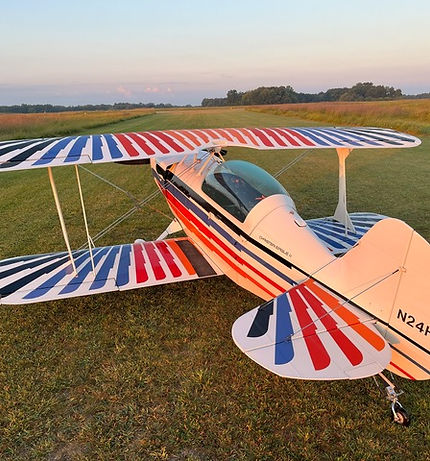
Christen Eagle II
The Christen Eagle II is a homebuilt aerobatic biplane introduced in the 1970s, designed by Frank Christensen as a sleek, performance-oriented competitor to the Pitts Special. Its unique design features a welded steel-tube fuselage, wooden wings, fabric covering, and a signature bubble canopy that gives it both aerodynamic precision and striking visual appeal.
Equipped with a 200-horsepower Lycoming engine, the Eagle II can perform complex maneuvers with ease and absorb high G-forces (+9/–6 G). With a top speed of nearly 185 mph, it remains a favorite among aerobatic pilots and enthusiasts alike. Over 350 kits have been built and flown, making it one of the most successful kit planes in history.
Whether flying in competition or on display at an air show, the Christen Eagle II is a symbol of precision engineering and pilot-driven performance. Its sharp handling and colorful, feather-like paint schemes make it a standout on any flight line.

Beechcraft T‑6 Texan II (T‑6 Texan II‑S)
Training Tomorrow’s Military Pilots
The Beechcraft T‑6 Texan II is a modern turboprop trainer used by the U.S. Air Force and Navy. With ejection seats and an advanced cockpit, it prepares student pilots for the transition to jets.
Highlights
-
Based on the Swiss Pilatus PC‑9
-
Equipped with a four-blade prop and pressurized cockpit
-
Used by multiple branches and allied nations

Cessna 172 Skyhawk (SEMO)
The Cessna 172 Skyhawk is the most-produced aircraft in aviation history, with more than 44,000 units built since its debut in 1956. Its reliability, simplicity, and forgiving flight characteristics have made it the go-to training aircraft for flight schools across the globe.
Powered by a 4-cylinder engine and featuring a high-wing configuration, the Skyhawk offers excellent visibility and stable handling, making it ideal for student pilots and seasoned aviators alike. It typically cruises around 120 knots and has a range of over 600 miles, depending on load and weather.
For many pilots, the Cessna 172 was their first solo flight, making it a memory tied to freedom and personal achievement. It’s a true workhorse that continues to earn its place in hangars and skies around the world.

Cessna 172 Skyhawk (CAP)
The Cessna 172 Skyhawk is the most-produced aircraft in aviation history, with more than 44,000 units built since its debut in 1956. Its reliability, simplicity, and forgiving flight characteristics have made it the go-to training aircraft for flight schools across the globe.
Powered by a 4-cylinder engine and featuring a high-wing configuration, the Skyhawk offers excellent visibility and stable handling, making it ideal for student pilots and seasoned aviators alike. It typically cruises around 120 knots and has a range of over 600 miles, depending on load and weather.
For many pilots, the Cessna 172 was their first solo flight, making it a memory tied to freedom and personal achievement. It’s a true workhorse that continues to earn its place in hangars and skies around the world.

A-26 Invader "Lady Liberty"
From Combat to Comeback
“Lady Liberty” is the oldest flying Invader, the 130th one produced, accepted in August 1944 at Long Beach, California. It was flown to Great Dunmow, England, arriving on September 20, 1944, where it was assigned to the 9th Air Force, 410th Bomb Group, and began combat operations in early 1945.
The 410th BG initially received four A-26s, with each squadron getting one aircraft. These aircraft were painted completely black and used for night interdiction missions ranging across Germany.
After WWII, this aircraft was flown to Hobbs, New Mexico for storage. Later, it was refurbished and assigned to a USAF Reserve unit for three years.
Today, the aircraft is painted in 13th Air Force markings, though it never saw service in Korea. It continues to fly in honor of U.S. airpower history and American resilience.
Sponsored by: Carl & Terri Haake
Photos courtesy of the Commemorative Air Force

UH-60 Black Hawk
Since its introduction in 1979, the Sikorsky UH‑60 Black Hawk has been the backbone of the U.S. Army’s helicopter fleet. Designed for versatility and durability, this twin-engine utility helicopter can be found in nearly every combat and humanitarian mission, from troop transport and medical evacuation to disaster relief and firefighting.
Built to handle rugged terrain and adverse weather conditions, the Black Hawk can lift over 9,000 pounds and reach speeds exceeding 180 mph. Its armored fuselage and advanced avionics make it one of the most capable helicopters in the world.
To date, more than 4,000 Black Hawks have been produced and used by dozens of countries. Its iconic shape and thumping rotor sound are instantly recognizable. It’s a symbol of strength and support on the battlefield and beyond.

UH-72 Lakota
The UH-72 Lakota is a light utility helicopter based on the Eurocopter EC145, introduced into U.S. military service in 2006. It was designed to perform non-combat roles such as search and rescue (SAR), medical evacuation (MEDEVAC), border patrol, and pilot training.
With twin engines, modern digital cockpit systems, and room for up to nine passengers, the Lakota offers flexibility in both civilian and military operations. It’s used by the U.S. Army National Guard and training schools across the country and is valued for its low maintenance and operating costs.
While not built for combat, the UH‑72 plays a vital role in ensuring mission readiness and public safety. It demonstrates how modern helicopters can be adapted to serve communities in times of need.

Missouri State Highway Patrol Helicopter
Eyes in the Sky for Public Safety
This Bell 407 is a high-tech helicopter used by the Missouri State Highway Patrol. Equipped with infrared cameras and street overlay mapping, it helps officers track suspects, locate missing persons, and improve safety during dangerous pursuits.
Highlights
-
FLIR thermal imaging and real-time video overlays
-
Supports law enforcement and search operations
-
Enhances officer safety in high-risk situations

Icarus Glider
More information coming soon...
More Aircraft Coming Soon!
We’re still confirming additional civilian and military performers. Check back often as we update the lineup in the weeks leading up to the show.